THE SHORT ANSWER
Tile is one part of the assembly. In wet areas, ask how the layers, seams, penetrations, and connections beneath it will be handled.
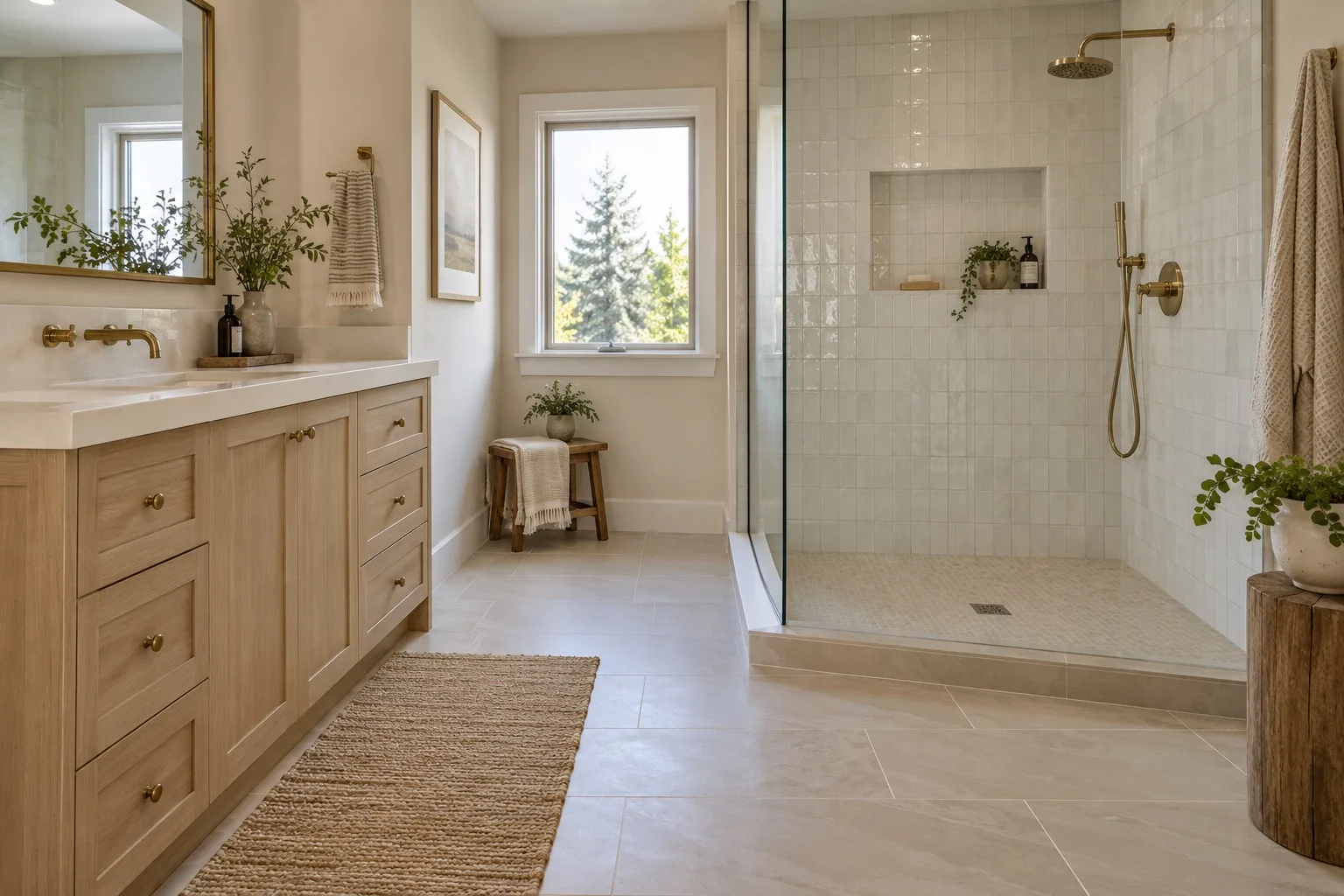
A bathroom tile project can look simple when it starts with a sample board. The choices behind the finished surface deserve just as much attention. A shower, a bathroom floor, and a decorative wall do not have identical demands. Define the location and how it gets wet before narrowing the tile selection.
Identify the job the tiled area must do
Begin with a room sketch and mark the shower, tub, floor, and any areas you intend to keep. Explain whether the project is a cosmetic update, replacement of damaged work, or a change to the layout. Those are different starting points.
Take photos of the whole room and the details that concern you. If there has been a leak, describe when it appears and what has already been investigated. New tile should not be treated as a diagnosis or a repair plan for an unexplained water problem.
Do not confuse tile with a waterproof assembly
Schlüter explains that tile and grout alone should not be treated as a waterproof finish. Schluter’s US guidance also distinguishes areas such as showers and tub surrounds from other floors, and describes the treatment of seams and connections needed to waterproof a particular system.
Ask which assembly is proposed for your wet area and how its components work together. A product described as waterproof is not the same thing as a complete, correctly detailed installation. Corners, penetrations, and transitions need attention under the applicable system instructions.
Reference: Schlüter: tile and water resistance · Schluter: waterproofing tile assemblies
Discuss the surface before selecting the finish
Ask what is known about the existing substrate and what can only be established after removal. If the proposal assumes the surface can be reused, understand what happens if that assumption proves wrong.
For a replacement project, request a clear distinction between removal, surface preparation, any necessary repairs, and the new tile installation. This makes it easier to understand both the starting estimate and any later decisions. It also keeps the conversation focused on the room rather than only the cost of a tile box.
Include movement joints in the design conversation
The Tile Council of North America explains that movement joints accommodate stresses between the tile and substrate. Their placement depends on site conditions; it is not something to improvise after the tile is installed.
Ask where the installation needs movement accommodation and how those joints will look in the finished room. If you want a very continuous appearance, discuss that preference early so it can be reconciled with the assembly’s requirements.
Resolve the visible details before installation
Lay out your priorities: a centered feature wall, a particular grout color, the appearance of exposed edges, or a clean transition to the adjoining floor. Bring samples together instead of choosing each element separately.
Confirm that the tile is intended for its proposed location and use. A decorative wall selection should not automatically become the floor selection. Ask the supplier or installer to check the product’s published suitability.
- Confirm tile, grout, edge treatment, and layout direction.
- Discuss cuts around corners, fixtures, and doorways.
- Clarify which fixtures or adjoining surfaces are included in the work.
- Ask what checks are required before the installation is covered or put into use.
- Keep the product names and care instructions for future reference.
Frequently asked questions
Does grout make a shower waterproof?
No. Do not rely on grout alone as the waterproofing strategy. The wet-area assembly and its connections need an appropriate system installed to its instructions.
Can damaged bathroom tile simply be covered with new tile?
That depends on the existing assembly and the cause of the damage. Discuss the substrate and any moisture problems first; a new finish does not resolve an unexplained underlying issue.
Can I choose and supply the tile myself?
Yes, discuss your selection before purchasing. Confirm suitability for the location, quantities, layout, and the additional installation materials needed.
YOUR NEXT STEP
Let’s give the details beneath your tile equal attention.
Share the room, approximate area, any existing concerns, and the tile you have in mind. We’ll discuss a clear scope for your project.
Discuss my tile projectOr call (360) 606-4444Sources & further reading
References checked October 9, 2026. Product guidance applies to the named product or system; local requirements should be confirmed for your address and project.