THE SHORT ANSWER
A railing is a complete system. Choose the appearance after confirming what the deck, attachment points, and local requirements call for.
Railings frame the view from a deck and shape its appearance from the yard. They also serve a purpose that goes beyond decoration. Whether you want a warm wood edge or a clean metal profile, the best starting point is the deck itself: its condition, layout, stairs, and connections.
Start with the deck you already have
Before selecting a replacement railing, discuss the condition of the deck and the locations where posts will attach. NADRA’s evaluation guide treats guards and handrails as part of a larger assessment that also includes structural supports and stairs. Choosing an attractive rail does not establish that the supporting deck is sound.
Bring photos of the overall deck, stairs, corners, and existing posts. Photos are useful for an initial conversation, but concealed conditions may need an in-person assessment.
Reference: NADRA: professional deck evaluation guide
Compare wood and metal in the context of your home
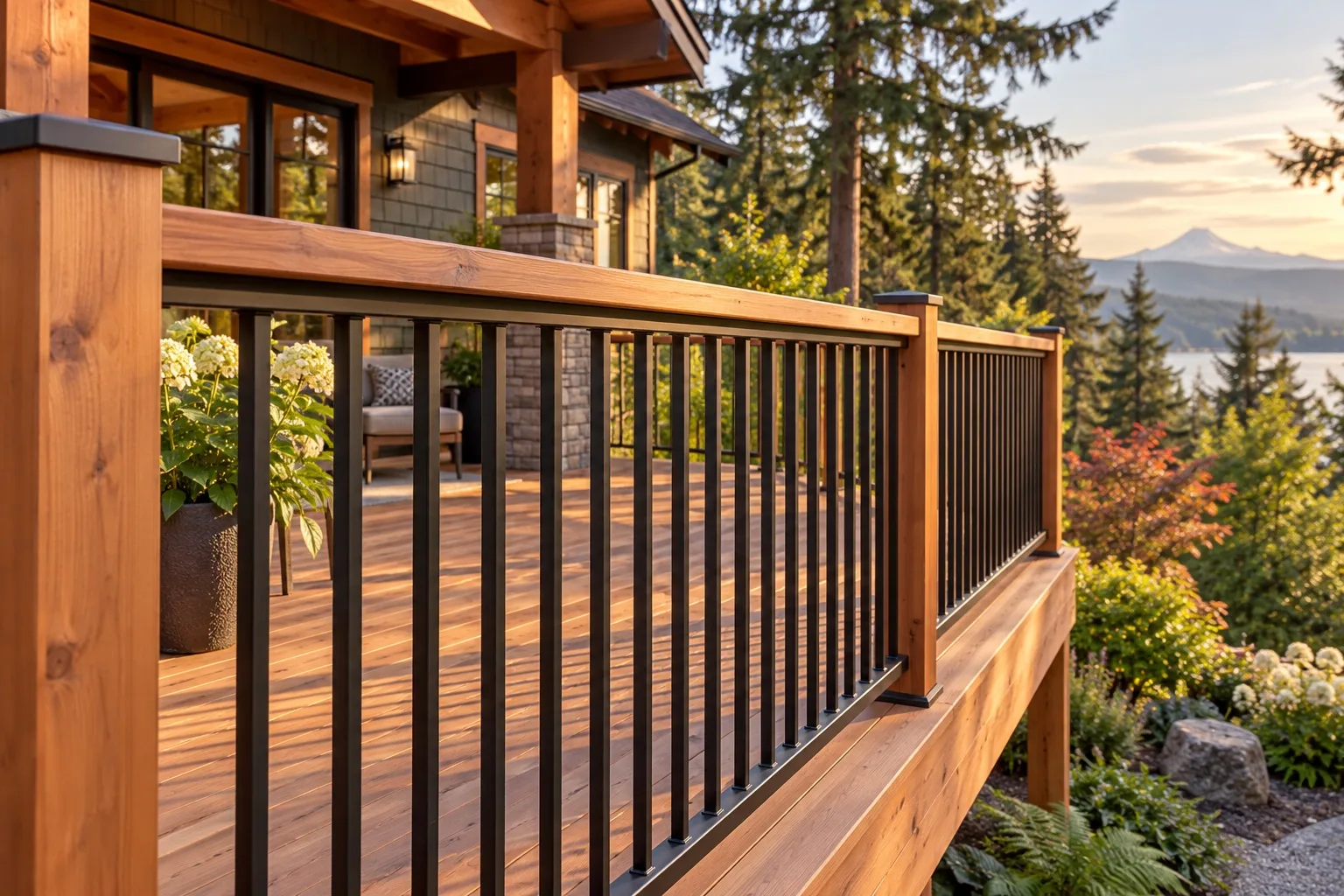
Wood rails may appeal if you want the perimeter to feel closely connected to the decking. A slender metal design may suit a preference for a more visually open edge. Treat those as design directions, then compare actual systems and samples.
Look at the railing from inside the house as well as from the yard. Consider the colors of window frames, trim, fencing, and outdoor furniture. A small set of coordinated details often makes a stronger impression than combining many different finishes.
- Choose whether the railing should blend in or create contrast.
- Compare the top-rail shape and post proportions, not just the infill.
- Discuss the upkeep of the exact wood finish or metal coating.
- Ask how corners, stairs, and transitions will be finished.
Plan stairs and handrails as part of the system
Draw the route from the house to the yard and identify every stair section. Discuss both the edge protection and any required graspable handrail. A decorative top rail should not simply be assumed to satisfy every handrail requirement.
The required details depend on the project and the applicable rules. Have the contractor confirm the guard height, openings, connections, and stair arrangement with the local authority and the selected system’s instructions. Avoid ordering solely from a generic dimension found online.
Treat movement and deterioration as reasons to pause
NADRA’s homeowner checklist emphasizes secure railings and stairs, sound wood, and the condition of fasteners. If a rail moves, a connection looks damaged, or nearby wood appears deteriorated, keep people away from that area and arrange an assessment rather than treating it as a cosmetic refresh.
Do not use a forceful push or a gathering of people as a test of a questionable railing. Record the concern from a safe position and describe when you first noticed it.
Reference: NADRA: homeowner deck safety checklist
Get a clear replacement scope
Ask whether the proposal includes removal of old rails, changes at attachment points, stair work, finish repairs, and cleanup. If the existing condition is uncertain, ask how discoveries will be documented and priced before additional work proceeds.
It is also worth discussing the finished appearance where old posts or hardware are removed. Those areas can affect the final look, even when the new railing is beautifully matched. A good planning conversation covers those transitions before installation starts.
Frequently asked questions
Can railings be replaced without rebuilding the deck?
Sometimes. The existing deck and attachment areas must be assessed before a rail-only replacement can be confirmed.
Is a wood or metal railing better?
The right choice depends on the desired appearance, upkeep, available systems, and the existing deck. Compare real samples and complete installation scopes.
What should I do about a loose railing?
Keep people away from the affected edge or stairs and arrange a qualified assessment. Do not assume tightening a visible screw addresses the underlying connection.
YOUR NEXT STEP
Bring your deck together with the right rails.
Share a few photos and the look you have in mind. We’ll discuss a railing project that fits the deck and your home.
Discuss my deck railsOr call (360) 606-4444Sources & further reading
References checked October 9, 2026. Product guidance applies to the named product or system; local requirements should be confirmed for your address and project.