Vertical privacy fencing
An upright board pattern for a familiar backyard boundary.
VANCOUVER, WASHINGTON · FENCES
Natural texture, everyday privacy.
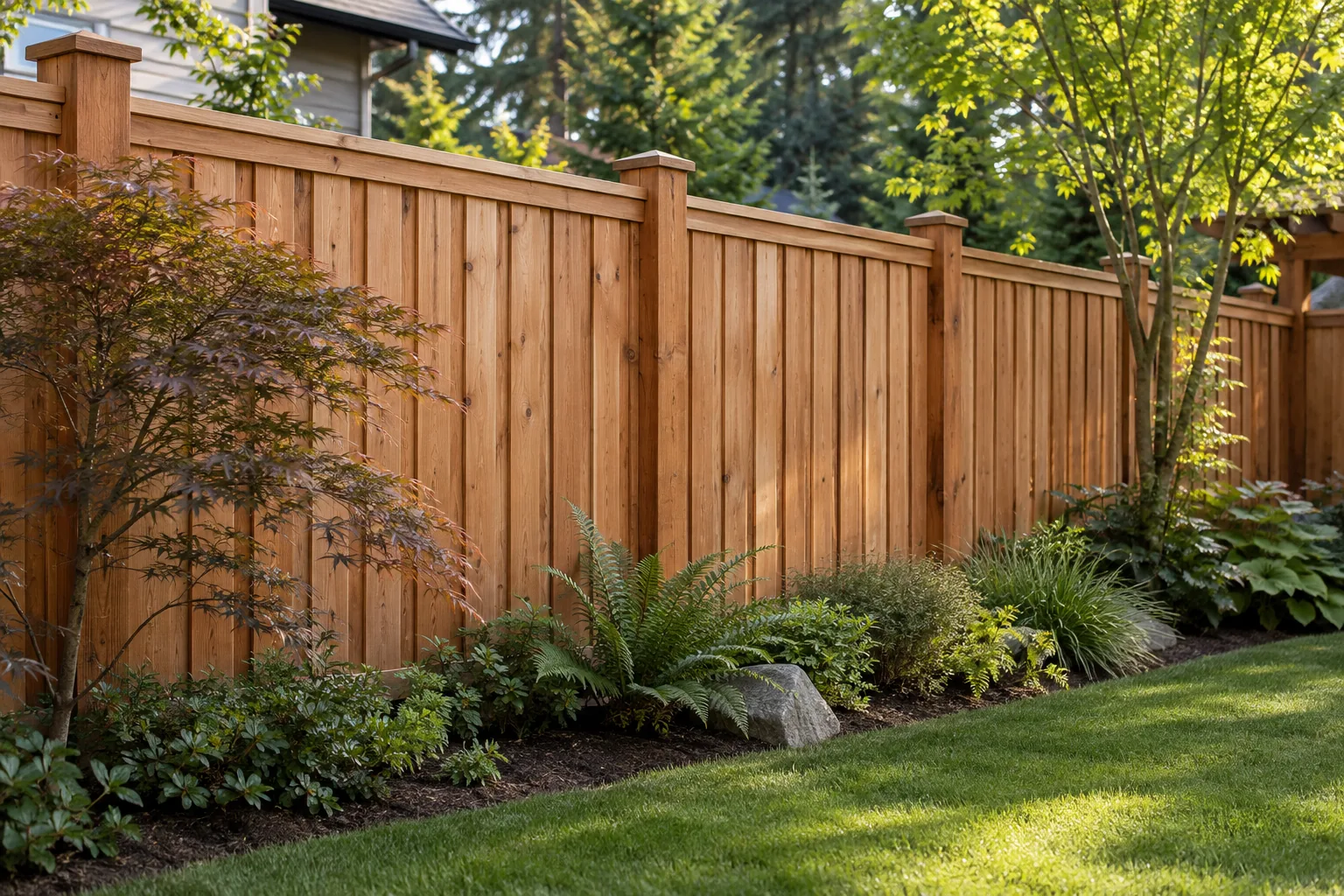
Cedar wood fences give a property a warm boundary that can be adapted to many homes. A traditional vertical fence keeps the pattern simple; board-on-board construction changes the depth and screening; cap and trim add definition. Think about both sides of a shared fence, not only the view from your patio. The right cedar fence design balances the privacy you need with an appearance that fits the surrounding landscape.
Board grade, thickness, and the supporting structure belong in the same conversation. Existing posts need to be assessed during replacement rather than assumed reusable. We also look at drainage, soil contact, gate locations, and how the fence approaches walls or planting beds. Decide whether staining is part of the initial scope so preparation and finishing are coordinated.
PROJECT-SPECIFIC ESTIMATES
A material price alone does not describe the work. Measurements, preparation, removal, supporting structure, access, and finishing all affect an installation or replacement.
Pricing, product selection, and timing are confirmed for your property in the written proposal.
LOCAL PLANNING
Gather boundary information and note neighboring fences, utilities, and gate access. An existing fence does not establish the legal property line.
The relevant jurisdiction depends on the property location. Review any HOA conditions and applicable approvals during planning; measurements and requirements must be confirmed for the actual site.
AFTER INSTALLATION
Cedar changes color outdoors. Choose between natural weathering and a finish-maintenance plan. Keep sprinklers from repeatedly soaking the fence and check for trapped debris near posts and lower boards.
Keep the chosen material and finish information with your project records. Product warranties and care requirements vary; confirm the actual terms and instructions for the installed system.
Staining is a choice about appearance and upkeep, not a substitute for sound construction. Discuss the desired color, exposure, and compatible finish before installation. Recoating follows the finish product’s instructions.
Side-by-side boards create a single layer. Board-on-board overlaps boards, which changes the depth, material quantity, and screening as the wood moves. Ask to see how the proposed pattern looks from both sides of the property.
Sometimes, but post condition, spacing, connections, and the proposed fence height need review first. New boards will not resolve a leaning or deteriorated support. Identify post replacement separately in the written scope.
Send photos, approximate fence length and gate locations, and your priorities for cedar wood fences. We review access, materials, removal, and site conditions before confirming the scope and price.
Yes. Share the full project, including related fencing, decking, stairs, or railings. Coordinating the work helps identify compatible materials and the right construction sequence. Availability and the final scope are confirmed in your proposal.
GOOD THINGS START WITH A CONVERSATION
Tell us what you have in mind. We’ll take it from there.