THE SHORT ANSWER
Start with how the yard needs to work. Confirm the property boundaries and local requirements before settling on the design.
A fence changes more than the view from your kitchen. It shapes the way you enter the yard, move equipment, and enjoy time outside. Before you choose a board pattern, make a short list of the problems you want the new fence to solve. That list is a better starting point than a photograph alone.
1. Decide what privacy means for your yard
Walk the yard from the places you actually use: the dining area, garden, back door, and side gate. Which views do you want to screen? Which would you prefer to keep open? A private seating corner and a front-yard boundary may call for different designs.
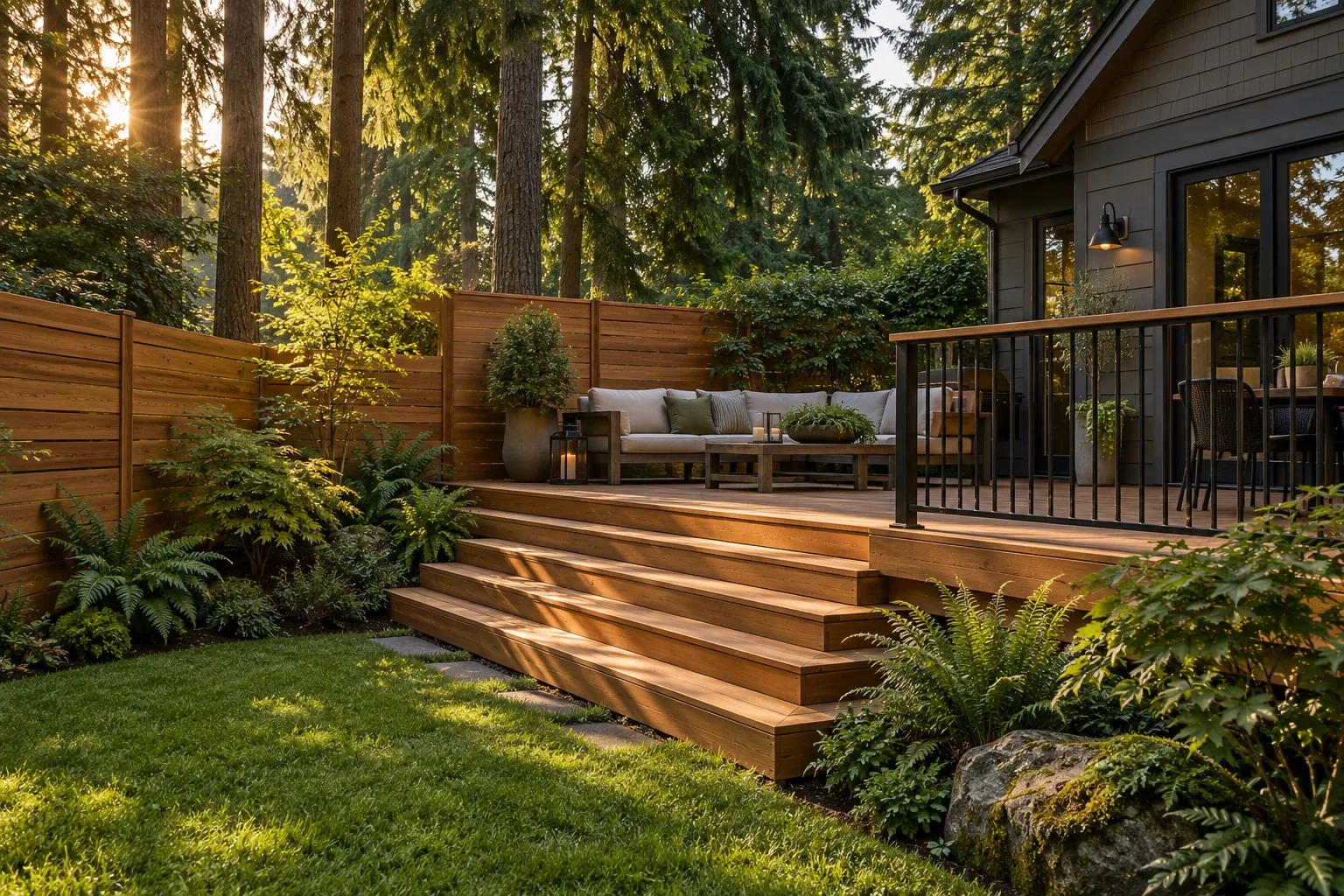
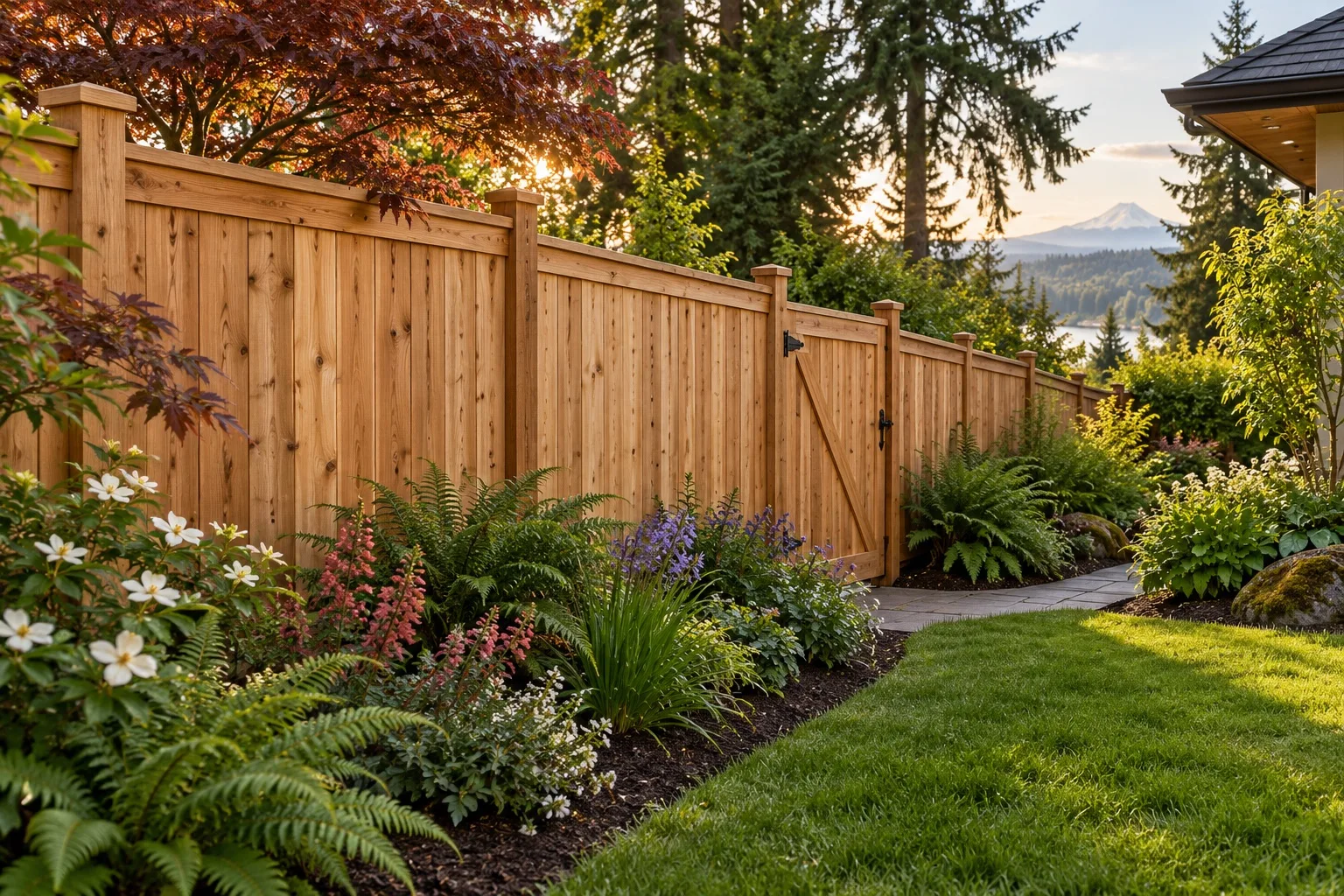
Bring two or three reference photos and explain what you like about each. It might be the warm wood tone, the clean horizontal lines, or a gate that feels welcoming. Separating those preferences makes it easier to create a design that belongs to your property.
2. Choose the look and its upkeep together
For a wood fence, discuss both the material and its intended finish. The Western Red Cedar Lumber Association describes natural weathering to silver-gray as one option; retaining or changing the original color involves choosing and maintaining a finish. A fence can look attractive either way, but the decision should be deliberate.
Ask to see a sample in your outdoor light. Then consider it beside the house, deck, and landscaping. A small sample helps make color choices more concrete, while a reference image helps explain the overall pattern.
Reference: Western Red Cedar Lumber Association: outdoor finishing
3. Give gates their own place in the plan
Think about the widest item that needs to pass through: a mower, wheelbarrow, waste bin, or future delivery. Note where you naturally approach the gate and whether the ground rises or falls along its path. Avoid choosing a gate solely because it matches a photo.
- Mark each gate on a simple yard sketch.
- List equipment that needs access and any latch preferences.
- Discuss removal of the old fence, vegetation, and access for the crew.
- Ask what is included in the estimate: posts, gates, finish, removal, and cleanup.
4. Check the address, boundaries, and digging plan
The City of Vancouver lists a permit exemption for fences six feet or less in height outside environmentally sensitive areas. That statement is not blanket approval for every location or design. Confirm the requirements for your address, including restrictions that may apply separately from a building permit. Properties outside city limits may fall under a different authority.
Do not assume an old fence establishes the legal boundary. Clarify the location before planning the new one. Washington’s Utilities and Transportation Commission also says to contact 811 at least two business days before digging to have underground utilities located. Build that step into the schedule.
Reference: City of Vancouver: fences, decks, and sheds · Washington UTC: call before you dig
5. Prepare a useful project brief
A few photos, approximate fence length, gate locations, and a description of the existing fence give the conversation a practical start. Add your preferred timing, but leave room for site review and any required approvals.
Compare estimates against the same written scope. If one proposal includes removal and finishing and another does not, the totals are answering different questions. A clearly defined project is more useful than a price that leaves important work unspecified.
Frequently asked questions
Do I always need a permit for a Vancouver fence?
Not always. The city describes an exemption for fences six feet or less outside environmentally sensitive areas. Confirm the rules for your exact address and design before work begins.
Can I replace a fence in the same location?
Discuss the existing location and confirm the property boundary and applicable requirements first. The position of an older fence should not be treated as proof of a legal boundary.
Can a gate be included in the same project?
Yes. Tell us the number of gates, their intended use, and any equipment that needs to pass through so we can discuss them as part of the scope.
YOUR NEXT STEP
A fence that fits your home starts with a plan.
Share your yard photos, approximate length, and gate ideas. We’ll discuss a fence project suited to your Vancouver home.
Discuss my fence projectOr call (360) 606-4444Sources & further reading
References checked October 9, 2026. Product guidance applies to the named product or system; local requirements should be confirmed for your address and project.