Boards & surface repairs
Assess worn or damaged areas and compatible replacement material.

VANCOUVER, WASHINGTON · DECKING
Understand the problem before covering it.
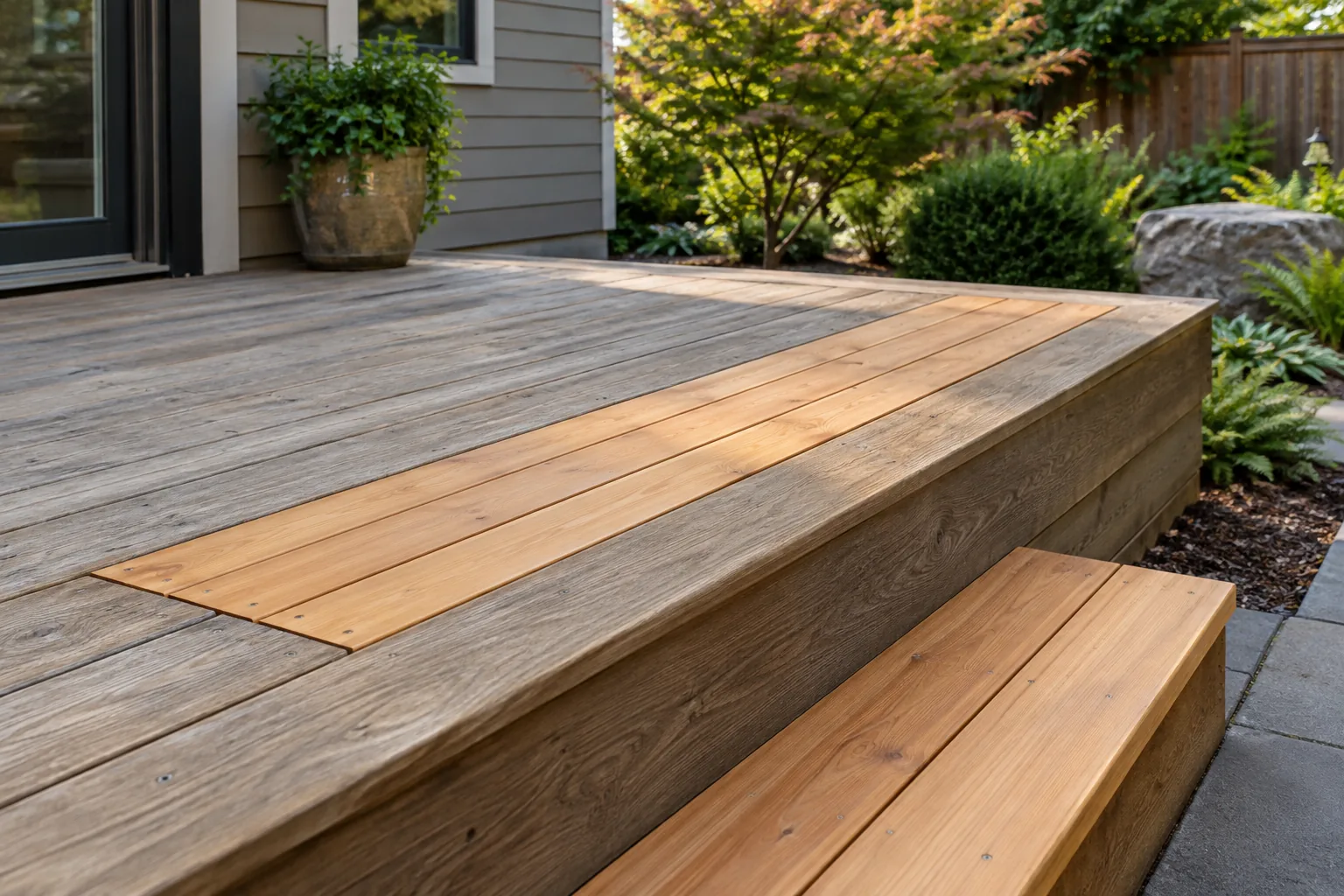
Deck repair begins with the condition of the whole assembly. A worn board, a loose stair, or a moving rail may be localized, but the cause can be below the surface. Tell us what has changed and where you notice it. Photos help start the discussion, but they cannot establish structural safety or rule out concealed damage. We review whether repair or replacement is the more practical direction.
A useful repair scope identifies affected boards, support members, connections, and finishes. Matching old materials may be difficult, and removal can reveal additional deterioration. We discuss those possibilities and how changes will be handled before work proceeds. Resurfacing is considered only where the supporting structure is suitable for the proposed deck boards and railing.
PROJECT-SPECIFIC ESTIMATES
A material price alone does not describe the work. Measurements, preparation, removal, supporting structure, access, and finishing all affect an installation or replacement.
Pricing, product selection, and timing are confirmed for your property in the written proposal.
LOCAL PLANNING
Share the deck’s height, attachment to the home, stairs, and any unusual intended loads. A new surface does not establish the condition of the structure below it.
The relevant jurisdiction depends on the property location. Review any HOA conditions and applicable approvals during planning; measurements and requirements must be confirmed for the actual site.
AFTER INSTALLATION
After repairs, continue inspecting drainage, fastening, stairs, and rail attachments. Keep leaves and debris from trapping moisture. If a deck moves unexpectedly or shows serious damage, stop using the affected area and arrange a qualified assessment.
Keep the chosen material and finish information with your project records. Product warranties and care requirements vary; confirm the actual terms and instructions for the installed system.
Possibly, if the surrounding structure and remaining boards are suitable. We look for the source of damage and discuss material matching. Replacing the visible surface alone may leave the underlying problem unresolved.
Resurfacing may be practical when the supporting structure is sound and compatible with the replacement boards. Widespread deterioration or unsuitable connections can change that decision. A site assessment comes before choosing a surface-only scope.
Photograph the surface, stairs, railing, and accessible underside without entering unsafe areas. Note movement, soft spots, leaks, and prior repairs. Stop using areas that appear unsafe and arrange an assessment rather than covering damage with new boards.
Send photos, approximate dimensions and the condition of any existing deck, and your priorities for deck repairs. We review access, materials, removal, and site conditions before confirming the scope and price.
Yes. Share the full project, including related fencing, decking, stairs, or railings. Coordinating the work helps identify compatible materials and the right construction sequence. Availability and the final scope are confirmed in your proposal.
GOOD THINGS START WITH A CONVERSATION
Tell us what you have in mind. We’ll take it from there.