Cedar privacy boards
Natural wood with a close-board layout for backyard screening.

VANCOUVER, WASHINGTON · FENCES
A modern edge for a more private yard.
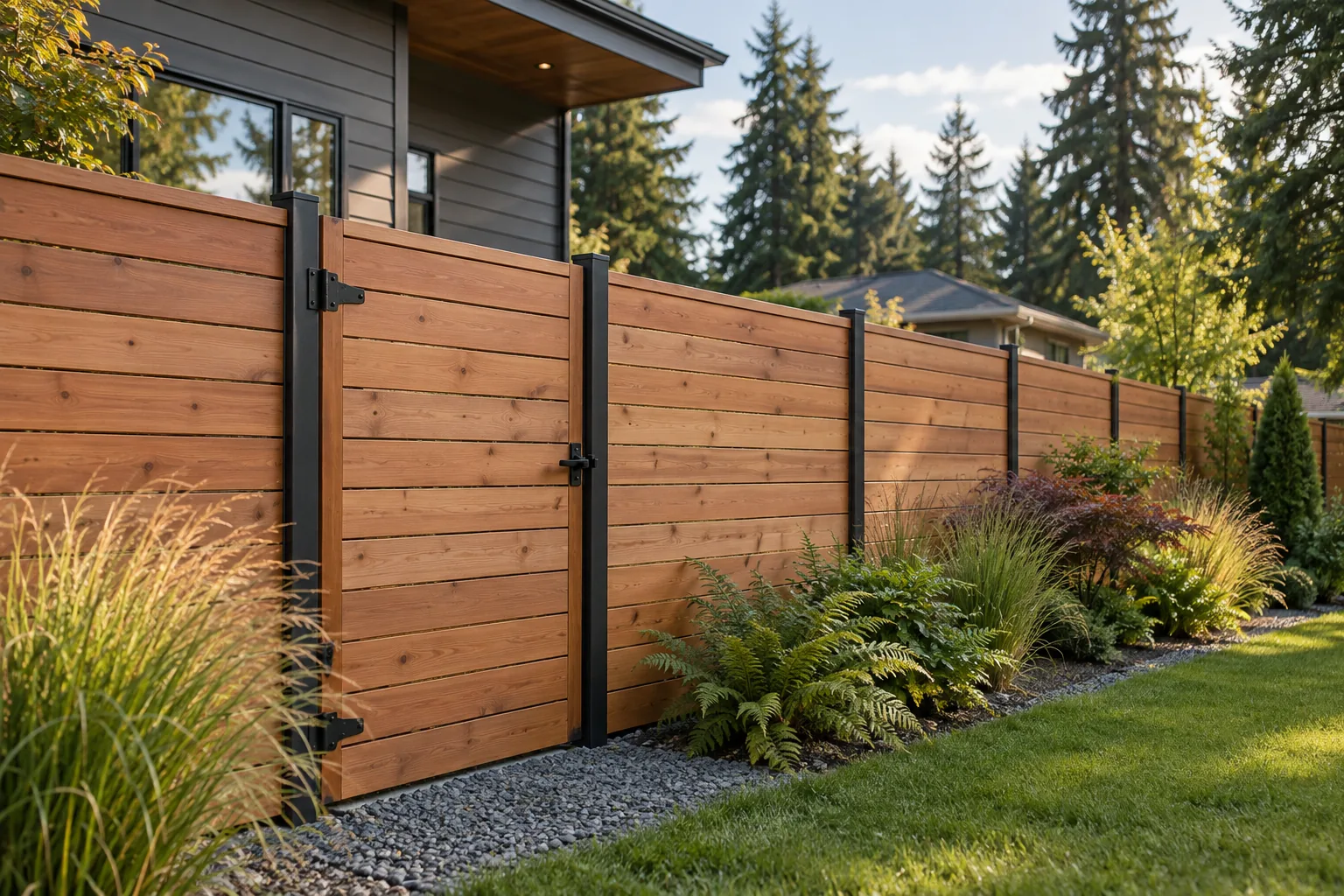
Horizontal fence installation changes the rhythm of a yard with boards that run across the fence rather than upright. Start by deciding what should be screened: a seating area, a neighboring window, or the entire boundary. From there, choose the board width and spacing that suit the home. A solid privacy fence and a spaced horizontal design serve different purposes, so the appearance should follow how you use the space.
Long board runs make support and alignment especially visible. The layout needs to account for corners, board joints, and changes in elevation. On a slope, planned steps can preserve the horizontal pattern without leaving unexpected openings at the bottom. Gate framing also needs its own support; matching the board pattern alone does not make a gate stable.
PROJECT-SPECIFIC ESTIMATES
A material price alone does not describe the work. Measurements, preparation, removal, supporting structure, access, and finishing all affect an installation or replacement.
Pricing, product selection, and timing are confirmed for your property in the written proposal.
LOCAL PLANNING
Gather boundary information and note neighboring fences, utilities, and gate access. An existing fence does not establish the legal property line.
The relevant jurisdiction depends on the property location. Review any HOA conditions and applicable approvals during planning; measurements and requirements must be confirmed for the actual site.
AFTER INSTALLATION
Clear leaves and planting away from the lower boards. Inspect exposed fasteners and moving gate parts, and follow the selected wood finish instructions. Seasonal wood movement is part of planning a horizontal cedar fence.
Keep the chosen material and finish information with your project records. Product warranties and care requirements vary; confirm the actual terms and instructions for the installed system.
Often, yes. The grade may call for stepped panels or shorter runs. We review the slope and bottom clearances before choosing a layout, particularly where pets use the yard.
Wood moves with moisture changes. Board selection, spacing, and support should allow for that movement. If screening is essential, discuss a layout that accounts for seasonal gaps instead of assuming tightly fitted boards will remain unchanged.
Board lengths, joints, support spacing, and stepped sections affect the work. A long uninterrupted design can require a different framing approach than a vertical fence. Compare proposals using the same board dimensions, finish, gates, and removal scope.
Send photos, approximate fence length and gate locations, and your priorities for horizontal fence. We review access, materials, removal, and site conditions before confirming the scope and price.
Yes. Share the full project, including related fencing, decking, stairs, or railings. Coordinating the work helps identify compatible materials and the right construction sequence. Availability and the final scope are confirmed in your proposal.
GOOD THINGS START WITH A CONVERSATION
Tell us what you have in mind. We’ll take it from there.